
USV conversion kit for existing boats
A kit that turns a RIB or workboat, one you own or one bought locally, into a remotely operated unmanned surface vessel.
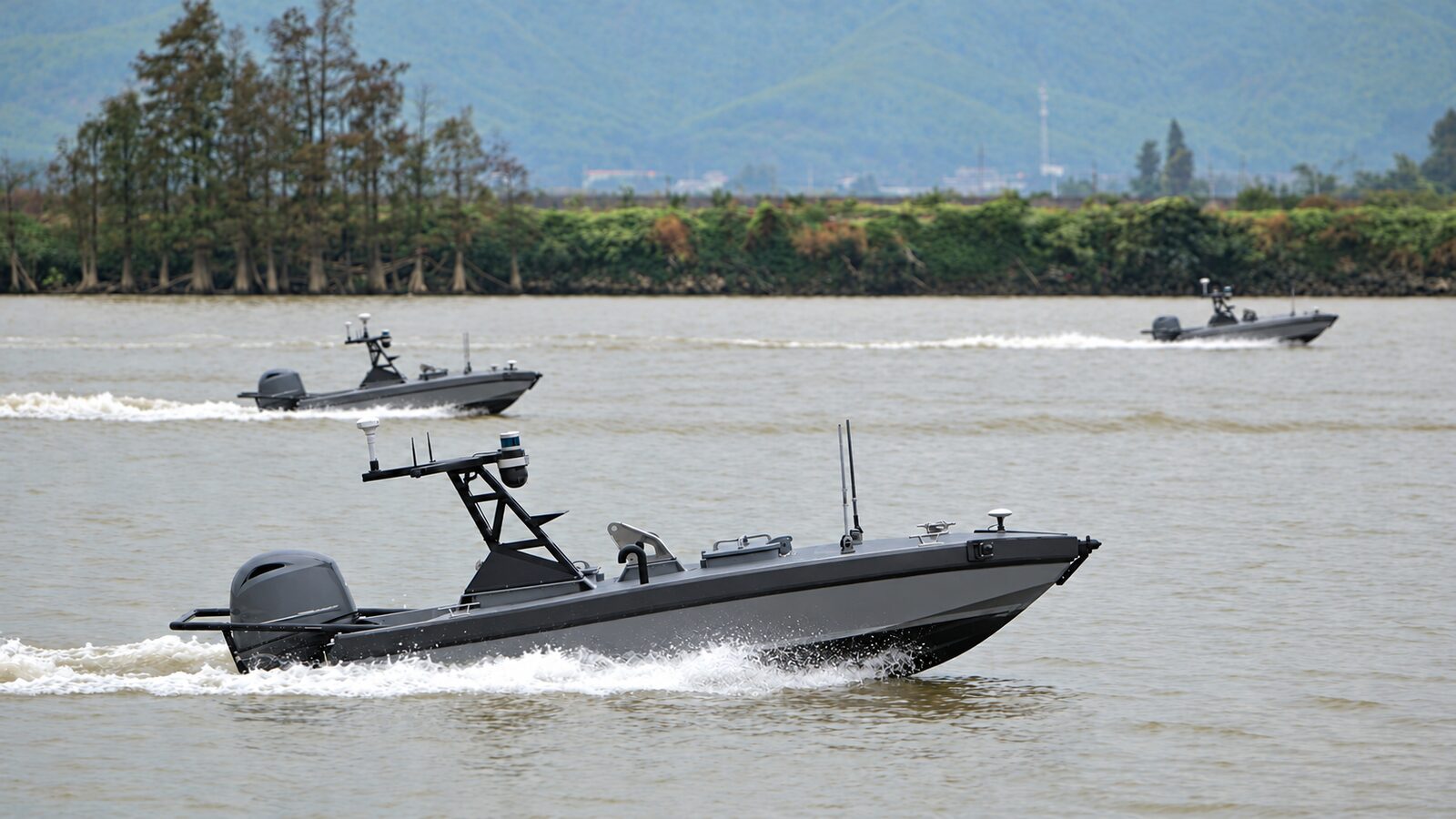
The USV conversion kit turns a RIB or workboat, one you own or one bought locally, into a remotely operated unmanned surface vessel (USV). There is no hull to ship: a boat from your own market, with our kit fitted, becomes the USV. It fits RIBs, workboats and survey launches with hydraulic, cable or tiller steering, single or twin engine.
The kit carries the parts the boat needs to be run from shore:
- an ArduPilot autopilot;
- RTK position and dual-antenna heading;
- the steering actuator for your steering type;
- a throttle actuator;
- a radio link and a Starlink terminal;
- the ground-control software for a laptop, and a handheld controller for manual control.
The boat keeps its own helm, so it can still run crewed. Configured to order, quoted per boat.
Suitable boats
RIBs, workboats, survey launches and safety boats, with one or two engines. Send photos of the helm, the steering and the engine controls for a configuration.
A boat suits the USV conversion kit when it has:
- Steering that is hydraulic, mechanical cable or tiller. Electronic steering (drive-by-wire) is integrated on request.
- Engine controls on a lever, or a tiller outboard, configured per engine. Electronic engine controls are integrated on request.
- Power from a 12 V or 24 V system.
- Space for the controller in a dry place, and a mount for the GNSS antennas, the radio antenna and the Starlink terminal with a clear view of the sky.
Installation
Installing the USV conversion kit takes four steps.
- Survey. From your photos and details of the helm, steering, engines and electrics, we confirm the configuration and the parts for your boat.
- Fitting. The steering actuator connects to the existing steering: into the hydraulic lines, onto the steering cable, or at the tiller. The throttle actuator fits to the existing control lever, or is configured per engine on a tiller boat. The controller goes in a dry place, and the antennas and the Starlink terminal on a mast or arch. The helm stays in place.
- Commissioning on your water. We set up the autopilot for the boat’s steering and engines, tune it on the water, and test both links and the safe-state behaviour.
- Training. Operator training on the ground-control software and the handheld controller.
The time it takes depends on the boat and its steering.
System overview
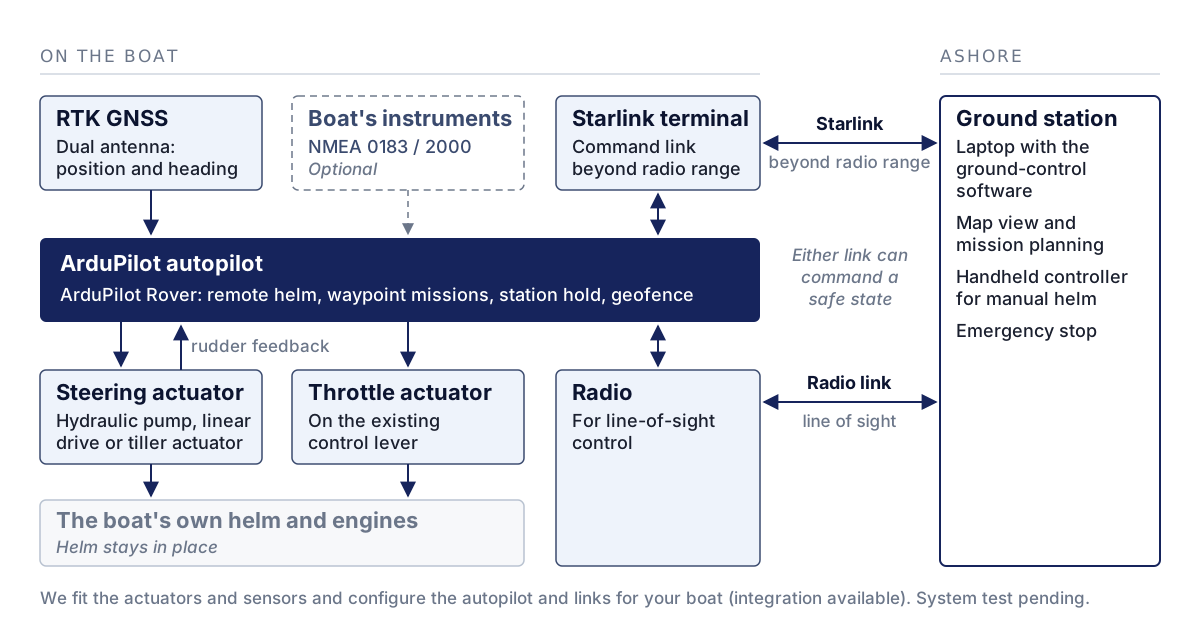
In the USV conversion kit, the autopilot steers through the steering actuator and sets speed through the throttle actuator, using RTK position and dual-antenna heading. A rudder feedback sensor closes the steering loop. The operator plans and runs the mission from the ground-control laptop: over the radio link within line of sight, and over Starlink beyond radio range. Steering and throttle control are set up for each boat (integration available).
Functions
The USV conversion kit runs ArduPilot Rover, which provides the functions below; we configure them for each boat (integration available).
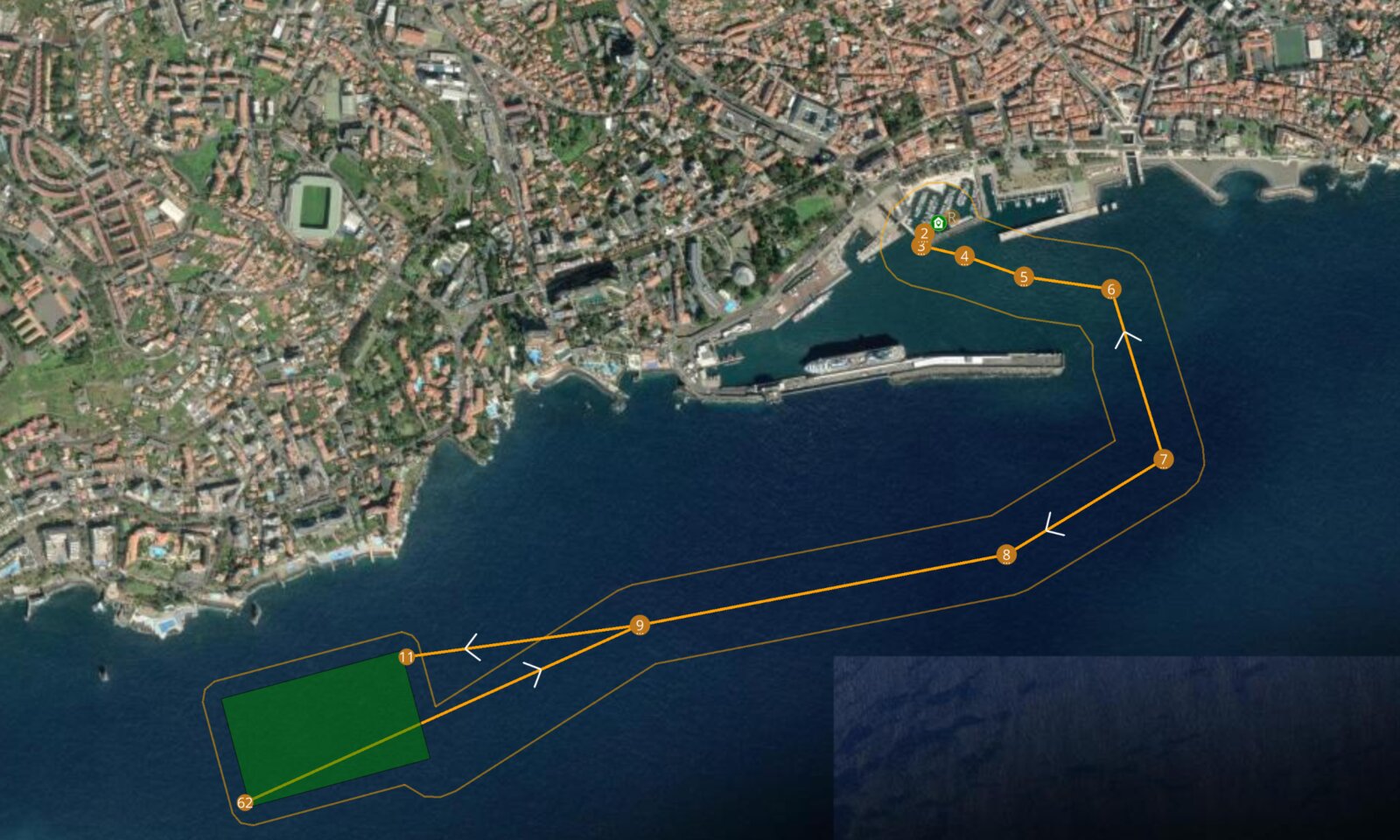
- Remote helm. Steer and set throttle from the laptop, or by hand with the handheld controller.
- Waypoint missions. Plan a route or survey lines on the map and run them.
- Station hold. Keeps the boat near a set point (Loiter mode).
- Loss-of-link behaviour. If the command link drops, the boat stops, holds station or returns, as you set it.
- Geofence. Keeps the boat inside a set area, and acts if it leaves.
- Emergency stop. Cuts the throttle on command from the ground station; an engine kill switch can be wired in per boat (integration available).
- Logs. Records position, commands, link status and alarms on every run.
Configurations
| Hydraulic steering | Cable steering | Tiller steering | |
|---|---|---|---|
| Typical boat | RIBs and workboats with hydraulic helms | Outboard boats with mechanical cable steering | Small outboard boats steered by tiller |
| Steering actuator | Reversing hydraulic pump, with rudder feedback sensor | Linear drive on the steering cable, with rudder feedback sensor | Tiller actuator with position feedback |
| Throttle | Actuator on the existing control lever | Actuator on the existing control lever | Configured per engine |
| Engines | Single or twin | Single or twin | Single |
Electronic steering and electronic engine controls (drive-by-wire) are integrated on request (integration available).
Specifications
| All configurations | |
|---|---|
| Autopilot | ArduPilot Rover |
| Navigation | RTK GNSS, centimetre-level with base-station or network corrections, as standard. GNSS-denied navigation as an option: gap bridging under bridges and beside structures, jamming resilience, integrity monitoring. |
| Heading | Dual-antenna GNSS heading, independent of the boat’s compass |
| Links | Radio link for line-of-sight control; Starlink beyond radio range. Either link can command a safe state if the other drops (integration available). |
| Ground station | Laptop with the ground-control software (map view and mission planning), and a handheld controller for manual control |
| Supply | From the boat’s 12 V or 24 V system |
Components are specified for each boat. Full specification on request.
Options
- Integration with the boat’s NMEA 0183 or NMEA 2000 instruments (integration available).
- GNSS-denied navigation for bridges, structures and jamming regions.
- Survey payload integration: single-beam echo sounder, side-scan sonar.
Integration and support
| Integration | We fit the actuators and sensors, set up the autopilot for your steering and engines, and configure the links (integration available). |
| Delivery | Commissioning on your water, operator training, and support. |
| Ordering | Configured to order, quoted per boat. |
Questions and answers
Does the boat avoid other vessels on its own?
No. The kit follows a planned route, keeps inside a geofence, and holds station or returns if the link drops. A remote operator keeps watch. Collision avoidance is not part of the kit.
Can the boat still be used with a crew?
Yes. The boat keeps its own helm, so it can still run crewed.
Which boats does it fit?
RIBs, workboats, survey launches and safety boats with hydraulic, cable or tiller steering. Send photos of the helm, the steering and the engine controls for a configuration.
How long does installation take?
It depends on the boat, its steering and its engines. Send their details for a configuration.
Discuss your boat
Full specification on request. Tell us the boat, its steering and engines, and where it will run.
